Appraisal Apocolypse: Why Your Performance Review Is Undead
Dec 19, 2025
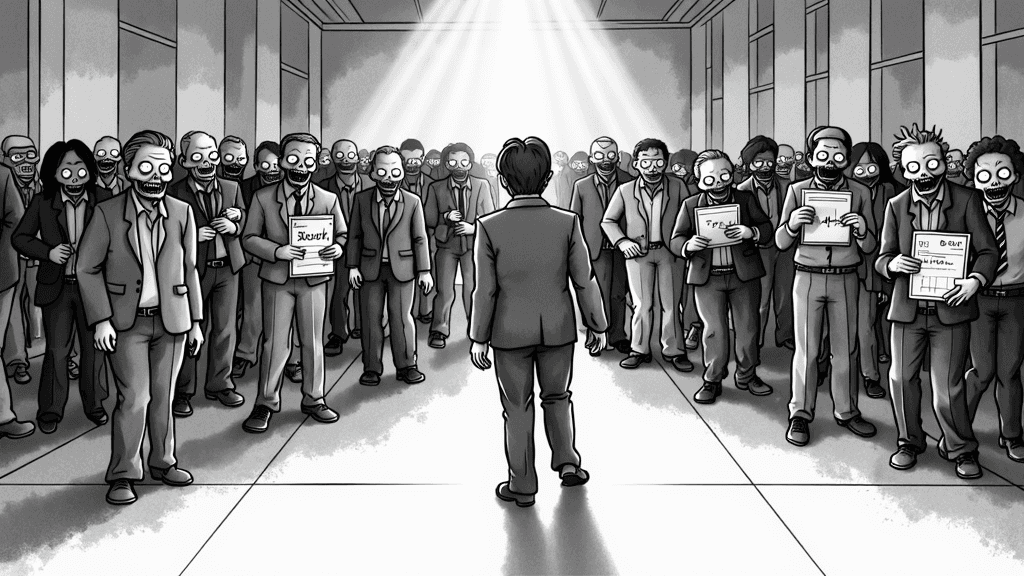
It shuffles through our organisations, a relic of a bygone era, mindlessly consuming time, energy, and morale. It spreads a virus of fear and disengagement, turning vibrant employees into listless versions of themselves. We are in the midst of a zombie apocalypse of appraisals, and most leaders don’t even see the horde at the gates.
For decades, we have accepted this ritual as a necessary evil. But the world of work has changed, and this undead process is no longer fit for purpose. This five-part series is your survival guide. We will diagnose the zombie appraisal, dissect its anatomy, and provide a powerful antidote grounded in the science of positive psychology. Our journey begins with recognising the enemy: the performance review itself.
The Anatomy of a Zombie: Deconstructing the Annual Review
The traditional appraisal is a perfect specimen of a zombie practice. It is mindless, infectious, and incredibly difficult to kill. Its persistence is due to its deep entrenchment in our corporate bureaucracy.
It Is Backward-Looking and Deficit-Focused: The zombie appraisal is an autopsy of the past, obsessed with mistakes and “areas for improvement.” This approach is fundamentally at odds with human psychology. As research shows, our brains are wired for growth, and positive emotions enhance creativity and problem-solving. The appraisal, by contrast, triggers a threat response, shutting down the very thinking organisations need.
It Is Infrequent and Untimely: The idea that a single, annual conversation can meaningfully capture a year of work is absurd. Effective feedback must be timely and specific. A zombie appraisal is the opposite, saving up feedback until it has lost its power and context.
It Conflates Development and Judgment: The process fatally attempts to be a tool for both compensation (judgment) and employee growth (coaching). When salary is on the line, psychological safety evaporates, and honest, developmental conversation becomes impossible.
It Is Driven by Extrinsic Demotivators: The zombie appraisal reduces a year of complex work to a single rating tied to a bonus. As Daniel Pink’s research shows, these kinds of “if-then” rewards are not only ineffective for creative work but can be actively harmful, extinguishing intrinsic motivation and fostering short-term thinking.
The First Step to Survival: Acknowledging the Apocalypse
The impact of this zombie process is an organisational public health crisis. It creates a culture of fear, not feedback, and leads to widespread disengagement. Gallup estimates that a staggering 77% of the global workforce is disengaged, and the appraisal is a major contributing factor.
To survive, leaders must admit they are in an apocalypse. Tinkering with forms is like boarding up the windows when the zombies are already inside. A true transformation requires the courage to declare the old way dead and to embrace a new philosophy grounded in the science of human flourishing. It means moving from a process that judges the past to a system that builds the future.
In our next article, we will target the zombie’s brain: the rating.
Reflection Questions
For the Executive:
If we were to honestly calculate the total hours our organisation spends on the annual appraisal process, what is the real ROI?
How might our current appraisal process be unintentionally filtering out the very creativity and risk-taking we claim to want?
What are the hidden costs of the anxiety and disengagement our current process creates, in terms of turnover and lost productivity?
When we look at our highest-performing teams, what is the relationship between their success and their informal, day-to-day feedback practices?
What is the single biggest “zombie belief” about performance management that is holding our organisation back?
If we were to design a performance development system from scratch, based on the science of motivation, what would be the three most important principles?
For the Manager:
How much time do I spend preparing for and delivering annual reviews, versus having regular, developmental conversations?
When I deliver a difficult message in an appraisal, do I feel it is genuinely helping the employee to grow, or just fulfilling a procedural requirement?
How has the pressure to assign a rating or ranking changed the dynamic of my relationship with my team members?
What is one aspect of the current appraisal process that I, as a manager, find demotivating or unhelpful?
If I had complete freedom, how would I prefer to recognise and develop the people on my team?
What is one small step I can take this week to decouple a developmental conversation from a discussion about ratings or pay?
For the Team Member:
How have I felt in the weeks leading up to my past performance reviews? Energised and excited, or anxious and defensive?
Has the feedback I’ve received in an annual review ever felt like a surprise? If so, what does that say about our day-to-day communication?
When have I felt most motivated and engaged at work? What was the role of feedback and recognition in that experience?
If I could redesign the appraisal process, what is the one thing I would change to make it more valuable for my own growth?
How has the focus on a single rating or score affected my willingness to take on challenging projects or admit mistakes?
What kind of feedback would actually help me to get better at my job, and how could I proactively ask for it?
'''